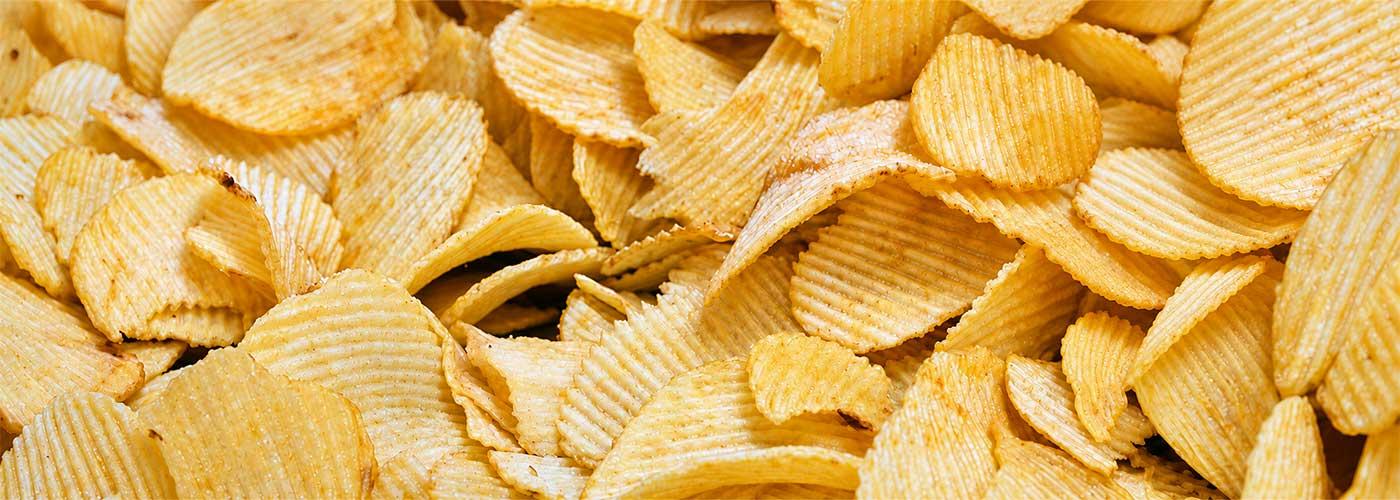
Courtesy of Baking & Snack, a Sosland Publication
Photos by Baking & Snack
Read the original article in the October 2026 digital edition of Baking & Snack
Better Made Snacks has found success by following a simple formula: good products at a fair price. Much like the city the company calls home - Detroit - the strategy isn't flashy, but it is reliable and led to the company's resilience. After 96 years in business, it's clear that consistent quality and affordable prices have been key to outlasting the 20-plus local competitors Better Made has seen throughout its history.
“Give a good product at a fair price, and the sales take care of themselves,” said Phil Gusmano, vice president of purchasing at Better Made Snacks.
Even though Better Made has cracked the code for snacking success and longevity doesn't mean it's resting on its laurels. In fact, the company is continuously improving, always looking for ways to invest to reduce costs and expertly steward the business. This is especially critical in the challenging business environment over the past few years.
"You have to look at innovation as opportunity," Gusmano explained. "In order to keep your costs down, you actually have to spend some money to be more efficient."
This mindset has led Better Made to be an early adopter of several automation innovations like its automated packaging lines and the latest: Heat and Control’s Módulo de soporte de lavado de cortes (SWSM) Y Process Recirculation Support Module (PRSM).
With Better Made’s 100-year milestone on the horizon, the company remains committed to delivering that superior potato chip and making investments to ensure the price remains fair.
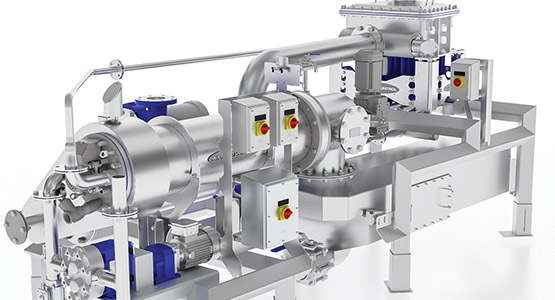
Utilized after sliced potato washing for potato starch, slivers, and fine silt removal and recirculates cleaned water back into raw preparation processes.
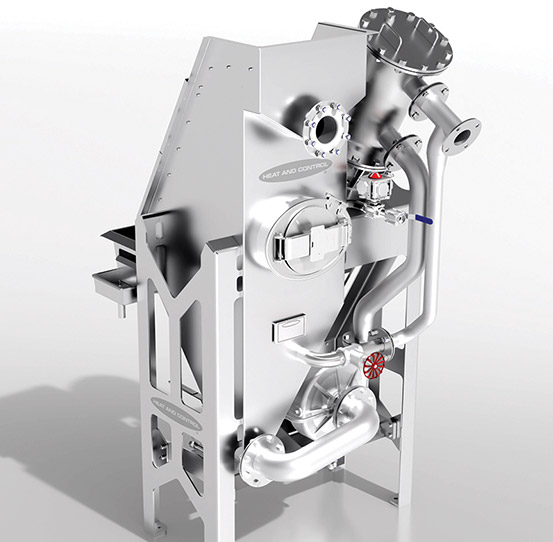
Aggressively cleans processed water via hydrosieves and hydrocyclones to minimize water consumption in a compact cost-effective configuration.
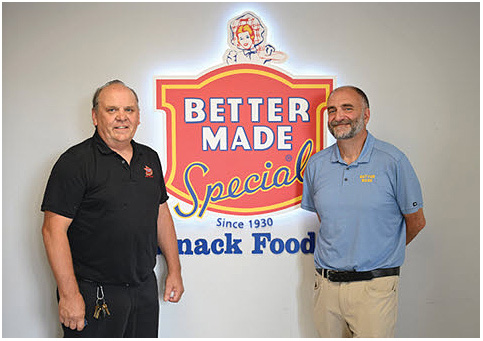
Better Made Snacks is Detroit. The company and its community mirror one another with their straightforward approach, resilient character, and focus on a fair deal and hard work. Better Made and Detroit serve and sustain each other in a mutually beneficial relationship that has spanned the snack manufacturer's entire history.
Better Made's products are found not only in retailers across the Midwest, but also in the local school system, Detroit stadiums and other city institutions. The company has a loyal fanbase, some of whom have gone so far as to memorialize the brand on their bodies with tattoos.
When Better Made launched its line of seasonings, Gusmano said the company received videos of people tearing up over receiving their favorite local chip flavor in a seasoning shaker. The loyalty remains strong even when people are far from home with Better Made Snacks being shipped around the world.
"We're a local company; we're still family owned, we've been around for nearly 100 years and we've been in Detroit that entire time," Gusmano said. "Customers appreciate that we're willing to be here for them."
The customer loyalty starts early. In addition to being a part of the local school foodservice, Better Made regularly makes itself available to schools for tours so students can see where their favorite snacks are produced.
Beyond its products being ingrained into Detroit's culture, Better Made is a steady supporter economically as well. The company strives to source its raw materials locally whenever possible with most of its potatoes coming from Michigan.
"We're a local company that supports local," Gusmano said. "When you buy a bag of Better Made, you're supporting your neighbors."
Seventy-five percent of its workforce lives within five miles of the manufacturing facility in downtown Detroit. The company is known for retaining employees with many enjoying a long tenure, the longest of which being 57 years. Gusmano chalks up this loyal workforce to treating employees fairly and doing right by them.
"The number of people that we have with 10-plus years of experience is pretty remarkable," he said. "I like to think we pay a fair wage, and we treat our employees well. We're a family-run company so we like to show our appreciation for them with barbecues in the summer and holiday activities and such."
Better Made is also known for its tangible community support going beyond employment and sourcing locally. Each year the company gives back through charitable partnerships, whether it's Metro Detroit Youth Day or the American Red Cross. During the COVID-19 pandemic, Better Made delivered snacks to hospitals, fire stations and police stations to show appreciation to frontline workers.
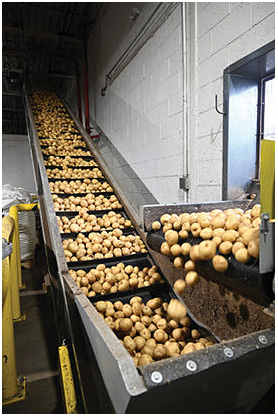 Better Made Snacks wasn’t always the Detroit snack manufacturer. In Better Made’s early years, local potato chip manufacturers were a dime a dozen. The city had more than 20 calling Detroit home. Better Made is the last one standing. Gusmano attributes that to the simple formula found in the company’s name itself: a quality chip at a fair price.
Better Made Snacks was founded in 1930 as Cross & Peter's Co. by Cross Moceri and Peter Cipriano. Their main goal: to make a better potato chip. The company achieved that through an intense focus on quality which continues to this day. Consistency and quality inform every decision at Better Made, from ingredient sourcing to the equipment it chooses and, of course, its quality assurance program.
"Every aspect of food safety is paramount to us," Gusmano said. "We actually use a lot of equipment from Heat and Control to ensure that our food is safe for consumers."
Throughout the company's history, Better Made has also stayed relevant by expanding its product portfolio. In the 1940s, potato sticks took off. In the 1950s, Better Made added Wavetts, a wavy, textured potato chip to its portfolio, and in 1965, Better Made branched out beyond the potato into ready-to-eat (RTE) popcorn. Today, the company's portfolio has expanded to include pretzels, pork rinds, tortilla chips, cheese puffs and party mix, though many are produced by co-manufacturers.
In the 1940s, Better Made moved into the facility on Gratiot Avenue where it still produces potato chips, sticks and popcorn today. When Better Made initially moved into the space, the company only occupied 5,000 square feet. Over the decades, Better Made has expanded to the entire 200,000 square feet.
In addition to offering a "better made" chip, Better Made is continuously improving its processes to create a more efficient business and reduce costs. Sustainability is a key variable in that equation.
"Sustainability is another way of saving money," Gusmano explained. "You're doing your part to not waste the money that you're earning. If we can do something that helps while also reducing our resource usage, that's a win-win."
Better Made has implemented a corporate recycling program to reuse corrugated cartons and recycle end-of-life cartons. The company also has invested in energy-efficient lighting for the production facility and prioritizes purchasing energy-efficient products. When it comes to product waste, potato scraps are used by local farmers for animal feed.
The snack manufacturer's latest investment has taken water and waste reduction to a whole new level. About five years ago, Better Made Snacks was looking at ways to improve the business. Water costs stood out, particularly the expense of the discharge water Better Made was sending back to the Great Lakes Water Authority.
“When you’re paying more money for water disposal and your business costs are continuing to go up, you start looking for ways to solve that problem,” Gusmano said.
At the same time, Heat and Control had been developing technologies to assist with raw material handling and improve environmental impacts. After years of conversations, in 2024, Better Made Snacks installed a Heat and Control SWSM for its dual fryers as well as the PRSM system. While the company wasn't the first snack manufacturer to implement the system, it was the first to run two fryers off one SWSM and the first to fully employ the cascade strategy for ultimate water savings.
During potato chip production, water is used to lubricate the slicers and peelers, wash away peel debris, and finally wash the starch off the slices before they enter the fryer. Previously, Better Made used fresh water for all of those processes, amounting to 130 gallons a minute, and then had to pay to clean the discharge water of starch and debris before giving it back to the city. With the SWSM and the cascading strategy, Better Made now only adds fresh water to one part of the process: to wash starch off the slices before they enter the fryer. That water is then reclaimed, filtered and cleaned, and recycled to earlier stages of the process to lubricate peelers, slicers and wash the peel debris off potatoes.
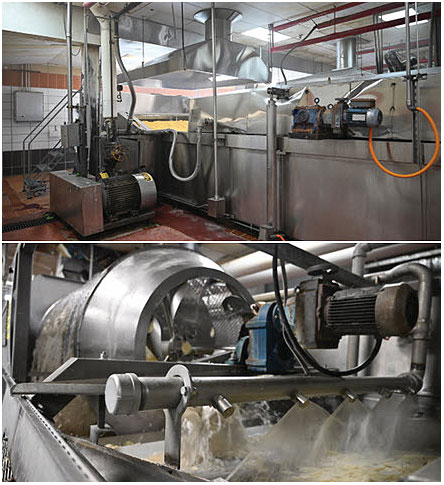
By only adding fresh water at the end of the process, Better Made reduced its water bills by 85%, using only 12 gallons (45 liters) of fresh water per minute. That return-on-investment, Gusmano estimated, took about 10 months to realize.
"Our water discharge went down so much that the Great Lakes Water Authority actually thought there was some kind of problem with the meter," Gusmano said. "It's a huge dollar savings. Not only do we use less water, but we also discharge less water, and the water we do discharge is much cleaner."
The PRSM and SWSM systems reclaim all the starch in that water. The company reclaims that starch and then sells it as a newfound revenue stream. “We’re recovering 12,000 lbs (5,443 kg) of starch a day, which is a saleable product,” Gusmano said. “There are some distilleries that make vodka out of our starch.”
The starch removal has also improved frying. Starch particles entering the fryer degrade the oil, which then impacts the quality of the product. By reducing that starch in the fryer, manufacturers extend the viability of the oil and maintain a much cleaner fryer.
| “ | Their system revolutionized the way we use water. |
Phil Gusmano, Vice President of Purchasing
Better Made Snacks
Installing the system, however, did come with some challenges. Better Made Snacks has operated in the Gratiot Avenue building for decades, so floorspace and production can be pretty confined. The fryer also sits low. The SWSM and PRSM had to be reconfigured to work in the space available. To accommodate two fryers, Heat and Control had to get creative with piping, valving and controls. The equipment supplier also adapted the system to run on 220 single phase electricity to avoid burdening Better Made on the utilities side. Typically, the SWSM runs on a three-phase electricity.
Ultimately, the finished system was a single-push button to start and stop to make it easy for plant operators to run the machine. Kevin Kukuk, project manager for Better Made, who led the installation for the company, was impressed with Heat and Control's training of the operations team.
"They trained our guys on what to look for, how to do things, how to rebuild the SWSM," he said. "It's just like any other project; it just takes a minute to get it right and then we picked it right up."
Better Made's results show what's possible when process water is filtered and reused upstream instead of sent down the drain. Discover how Heat and Control's Cascade Water Recirculation can help your plant cut fresh water use, lower disposal costs and recover valuable starch.
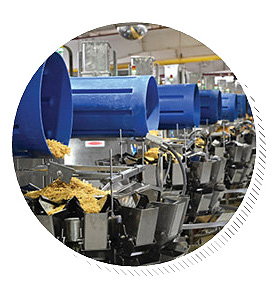
Because the Better Made snack facility has been the company's home for decades, it's no surprise that production is laid out in a way that has adapted to the company's growth over the years. Four production lines produce a wide range of potato chips and sticks, and one RTE popcorn line sits on a mezzanine. Better Made runs three shifts - two for production and one for sanitation - five days a week. The facility has the capacity to produce 14,000 to 15,000 lbs of finished product an hour.
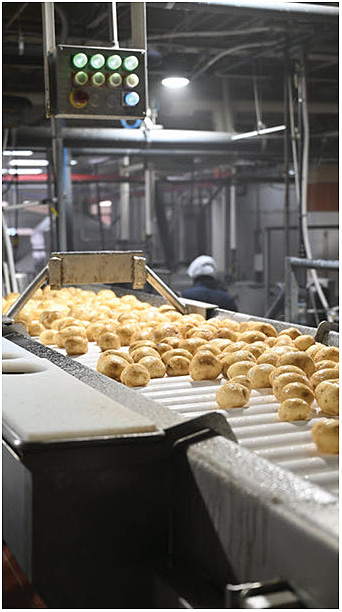
Between 300,000 and 400,000 lbs of potatoes are delivered every day. Potatoes come pre-washed and are delivered to 11 holding bins, each holding about a truckload's worth. As the production lines run low on potatoes, they call more from the bins, which send potatoes out automatically along floor conveyors.
Potatoes are peeled, and peel and scrap are saved to be sold as cattle feed, another waste stream that provides added revenue.
Peeled potatoes are then sent to holding bins at the front of each production line, which feed a retrofitted washer. Potatoes are sliced into sticks or chips - flats, waves and crinkles - before being washed right before frying. That water is then collected by the SWSM and filtered. The filtered water is cascaded upstream to feed the peeler. The fresh water is added at the most important moment in the process, right before the freidora, and Gusmano made it clear the water that is then cascaded up to the washer isn’t dirty; it’s simply filtered and recycled.
As a part of the filtering process, the starch is reclaimed by the PRSM. Reject potatoes, collected by an operator before the slicer and sent away via chute, are also blended for starch-extraction.
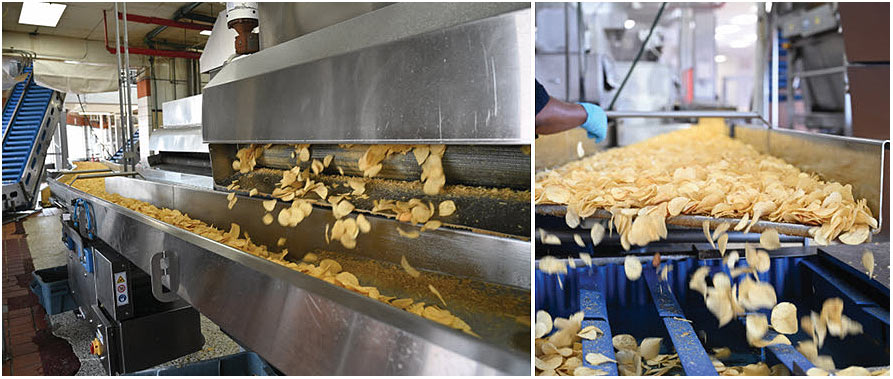
After slices and sticks go through the final wash, they enter the fryer. Once cooked, the chips and sticks move onto a series of Heat and Control vibratory cintas transportadoras that distribute the product in preparation for condimentos Y empaque.
On the day of Baking & Snack’s visit, Better Made was producing potato sticks and wave potato chips. For the chips, a final vibratory conveyor separates them by size for different packaging formats. Spinning discs allow smaller chips to fall to the lower conveyor, which sends the chips to be bagged in small packaging formats. Larger chips carry on for larger bag sizes.
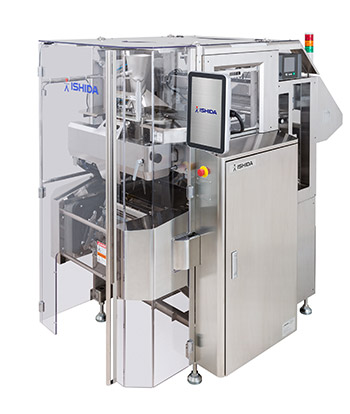 The packaging department features a mix of equipment, including Ishida Atlas and Inspira vertical form fill seal (VFFS) baggers and automated case sealers. On the mezzanine, chips and sticks are seasoned before the scales weigh out the appropriate amount of product into each bag. The bagger takes film, creates the bag and seals it. The automated case packers erect cases, fill and seal each one. The investment in these systems allowed Better Made to redeploy its employees to more value-added positions.
"Automation takes mundane, repetitive jobs and improves those," Gusmano said. "We've been able to take our people from packing bags to being more involved in running the equipment, so it's helped to develop a different quality of employee."
Once cases are sealed, they travel to another room where they are inspected by an Ishida X-ray system. If any issues are flagged, an operator can look at the code on the bags to determine when they were produced, what line and which operator was overseeing production.
Once product is cleared as safe, it is stored in a warehouse onsite. Better Made implements a first-in-first-out system to ensure snacks move through the supply chain on time. Bags are picked to fill orders and sent to distribution centers or directly to customers.
On the RTE popcorn line, white and yellow corn are stored in four bins, and the popcorn line calls for corn as needed. The corn is pulled from the bins through blue tubes to feed a kettle, which pops the corn. Cooked corn is then sent through a Spray Dynamics® tumbler to be seasoned — on this day, it was Red Hot — and then the VFFSs scale the popcorn into bags, which are then case packed and prepped for distribution.
Better Made is looking at celebrating its centennial in only a few years. Staring at such a milestone, Gusmano noted it's exciting, but that leadership also feels its weight.
"A lot of people earn a living here, so we have to ensure that continues on," he said. "We talk about the nostalgia of the brand, and there are a lot of stories associated with our products. We want to ensure that not only do those stories continue but also that people can develop new stories with their kids and their grandkids."
The formula for keeping the story alive remains the same: a good product at a fair price.
Seleccione el departamento al que desea enviar un email: